This is the Innovation Download, a monthly update on what's happening in Australia's startup and innovation ecosystem.
This issue is about capital. Who has it, where it's going, and what happens when it gets cheaper to build but harder to exit. We dig into the Cut Through Venture and Carta reports on Australian startup funding, look at why the country that produces more unicorns per VC dollar than anywhere else still can't take its best companies public. Plus Marc Andreessen on the cost of not backing something versus the cost of backing something that fails.
This Month's Reads
State of Australian Startup Funding 2025 (Cut Through Venture)
The rundown: Australia's startups raised $5.4 billion across 390 deals in 2025, a 31% jump and the third-largest funding year on record. But the headline simplifies the picture. Deal count dropped 20%, the top 20 deals captured 58% of all capital, and two companies alone account for a disproportionate share of the total. What the report describes is a two-speed ecosystem: AI-native companies with strong metrics moved fast, everyone else waited longer and worked harder. 66% of deals included at least one international investor, with local cheque sizes struggling to keep pace at Series A and beyond. The exit engine remains stalled, with just two ASX tech IPOs in all of 2025.
Takeaway: The headline number is real, but it obscures more than it reveals. Strip out the top deals and the picture looks different. What this report describes is an ecosystem maturing in the places investors can see, deal quality, founder discipline, international interest, while a structural problem builds in the places they can't. The exit backlog isn't just a liquidity issue. It's a recycling issue. Capital that doesn't return to investors doesn't return to founders. And capital that doesn't return to founders means the next generation of companies gets funded by a smaller, more selective pool than the one before it.
The Next Phase of Australia’s Tech Story Depends on Deeper Global Capital (HSBC Innovation Banking)

The rundown: Australia enters 2026 producing 1.22 unicorns for every billion dollars of VC invested, more than any other country on earth. The piece argues that Australian founders are capital-efficient by necessity. The small domestic market forces founders to think globally from day one. Australia sits on $4.5 trillion in superannuation, one of the largest pools of retirement savings on earth. This isn't a country short on capital. It's a country where the capital is pointing in a different direction. Only 4.4 cents in every dollar touches venture. Global pension funds allocate three times that. The money exists. It's just parked somewhere else.
Takeaway: 1.22 unicorns per billion sounds impressive. But per-capita and per-dollar stats can flatter small sample sizes. Australia has produced roughly 30 unicorns total. The US has produced hundreds. When your denominator is small, a handful of outliers can move the ratio dramatically. The stat tells you something about efficiency, but it doesn't tell you whether that efficiency is repeatable, structural, or just a few strong cohorts doing the heavy lifting. The more useful question isn't whether Australian founders are efficient. It's whether that efficiency survives contact with more capital, or whether it was always a product of having less of it.
The Australian Startup Outlook 2026 (Carta)
The rundown: Carta surveyed 500 Australian startup decision-makers and found a market caught between ambition and survival. 96% of founders still plan for an IPO. But 65% have less than 12 months of runway, and 86% saw burn increase over the past year. Exit timelines are stretching, with 47% now expecting a listing five or more years away. On AI, 80% privately believe there's a bubble, and 63% think the pressure will fade within 12 months, yet 40% have already reshaped their investor pitch around it. More than half of founders planning an IPO are eyeing dual or offshore listings, with Nasdaq the most cited target.
Takeaway: The gap between what founders believe and what they say is the real story here. When 80% think AI is a bubble but 40% have already reframed their pitch around it, it's hard not to wonder how much of the current AI positioning is conviction and how much is just good fundraising strategy. The offshore listing data is less surprising than it looks. Founders outgrowing their domestic exchange isn't unique to Australia. It happens in the UK, Canada, and most mid-sized markets. The difference is scale. When your best companies list elsewhere, the local market loses the signal that attracts the next generation of capital. In a market already short on exits, that feedback loop matters more than it would somewhere with a deeper bench.
Podcast Episodes Worth Your Time
Marc Andreessen: Will a16z Go Public & Why Labour Displacement with AI is Wrong? (20VC with Harry Stebbings)
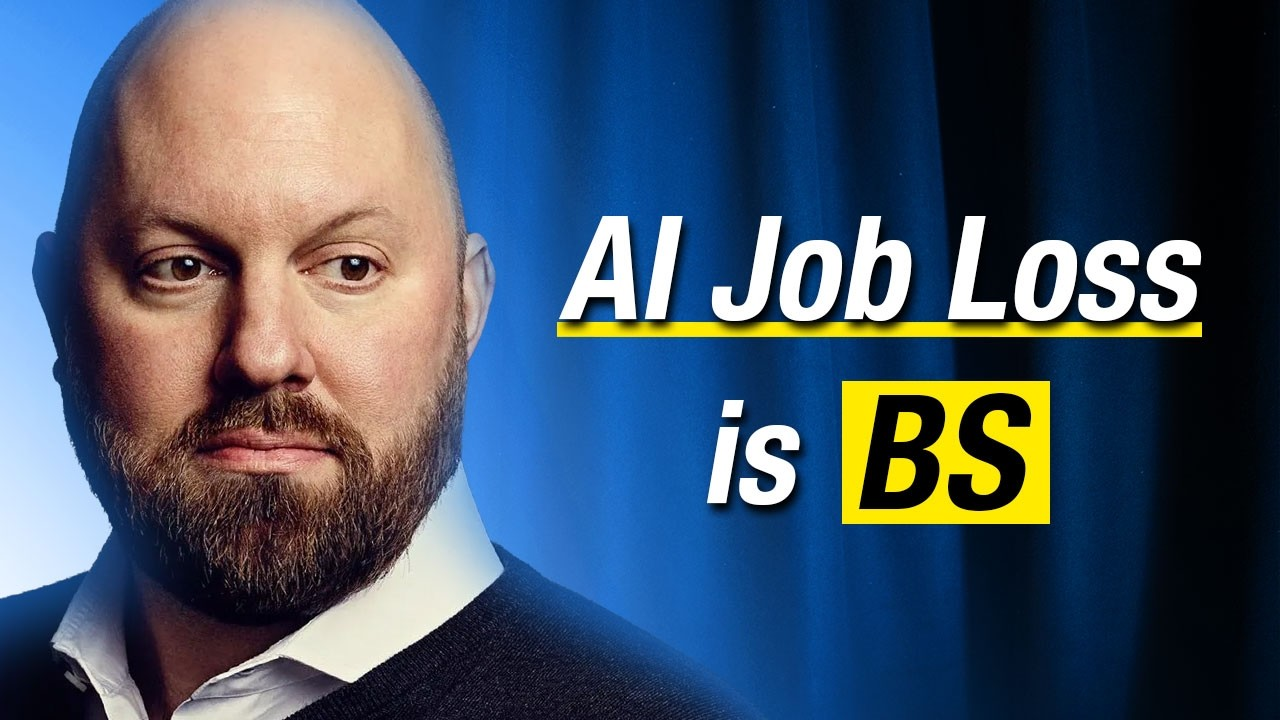
Marc Andreessen is the A in a16z and probably doesn't need an introduction, but for context: he co-created the first widely used web browser, co-founded Netscape, and now runs a venture firm managing over $90 billion.
He spends a lot of this conversation with Harry Stebbings on how venture capitalists (namely him) think about risk, and why most of them get it backwards. His argument: the biggest losses in venture don't come from bad bets. They come from the ones you never make. He calls it the "scalded stove" effect. An investor backs a category, it doesn't work out, and they avoid the whole space for years. AI was a reliable way to lose money in venture from 1945 to 2017. The investors who stayed away in 2018 because they'd been burned before made a category error dressed up as experience.
He also argues that the tech industry is more concentrated in Silicon Valley than at any point in its history, and that AI is the reason. Nearly 100% of what he calls "quality AI companies" sit within a 20-mile radius. For Australian founders who've always had to think globally from day one, "global" may increasingly mean getting to San Francisco earlier than previous generations needed to, for the capital and the been-there-done-it talent that's consolidating there.
The broader question he raises, and the one that sits beneath the surface of this whole issue, is what AI actually changes about work. In his view, large companies are overstaffed by 25 to 75%, and AI isn't displacing workers so much as giving companies a socially acceptable reason to fix hiring decisions they made during COVID. If that's true, it reframes the competitive landscape for startups. There's a window between "incumbents are distracted by their own restructuring" and "incumbents emerge leaner and more dangerous." The question for founders is whether they're building fast enough to matter before the other side finishes sorting itself out.
Helpful Resources:
💻 UTS Startup Guide for new founders
📝 Download the State of Australian Startup Funding 2025
🤖 Vibecoding basics for your first app
💻 Airtree: What investors look for in early-stage startup investments