On Thursday night, we decided to stop speculating and start talking.
Cremorne Digital Hub partnered with Aussie Founders Club to host The Great Victorian Startup Debate—bringing together some of the ecosystem's most influential voices for an honest, unfiltered conversation about where we stand, what we're getting right, and what needs to change.
The room was packed. The panel was stacked: Kate Cornick (LaunchVic), Paul Naphtali (Rampersand), Garry Williams (Group Group), Jodie Imam (Tractor Ventures), and Andrew Rowse (City of Melbourne). And moderator Megan Luttrell (Aussie Founders Club) wasn't here for surface-level answers.
The Numbers Don't Lie
Let's start with the data, because perception and reality don't always match.
Kate opened with a reality check: "Back in 2016 when we began, [the ecosystem] was $5 billion and 1,000 startups. Today there are 4,300 startups and we're valued at $146 billion."
That's 26x growth in valuation. By any measure, that's momentum.
But Kate also acknowledged the gap: "If we want to get to those top ecosystems, we've got to be worth about $600 billion. So we've got quite a long way to grow in maturity."
Translation? We're growing—but we're not done yet.
The Conversations That Needed to Happen
Then came the moment that got the room buzzing.
Paul Naphtali didn't hold back: "Melbourne is the only place in the world that's still talking about COVID." His message? "Let's draw a f****ing line under it and move on."
It landed. Hard. Because he's right—while other cities have moved forward, Melbourne has stayed stuck in the past, using it as a reference point instead of chapter we've closed.
Garry Williams brought another uncomfortable truth to the table: "We've got a 20% productivity gap at the moment. It's called Fridays. Can we just get back to work and do our stuff?"
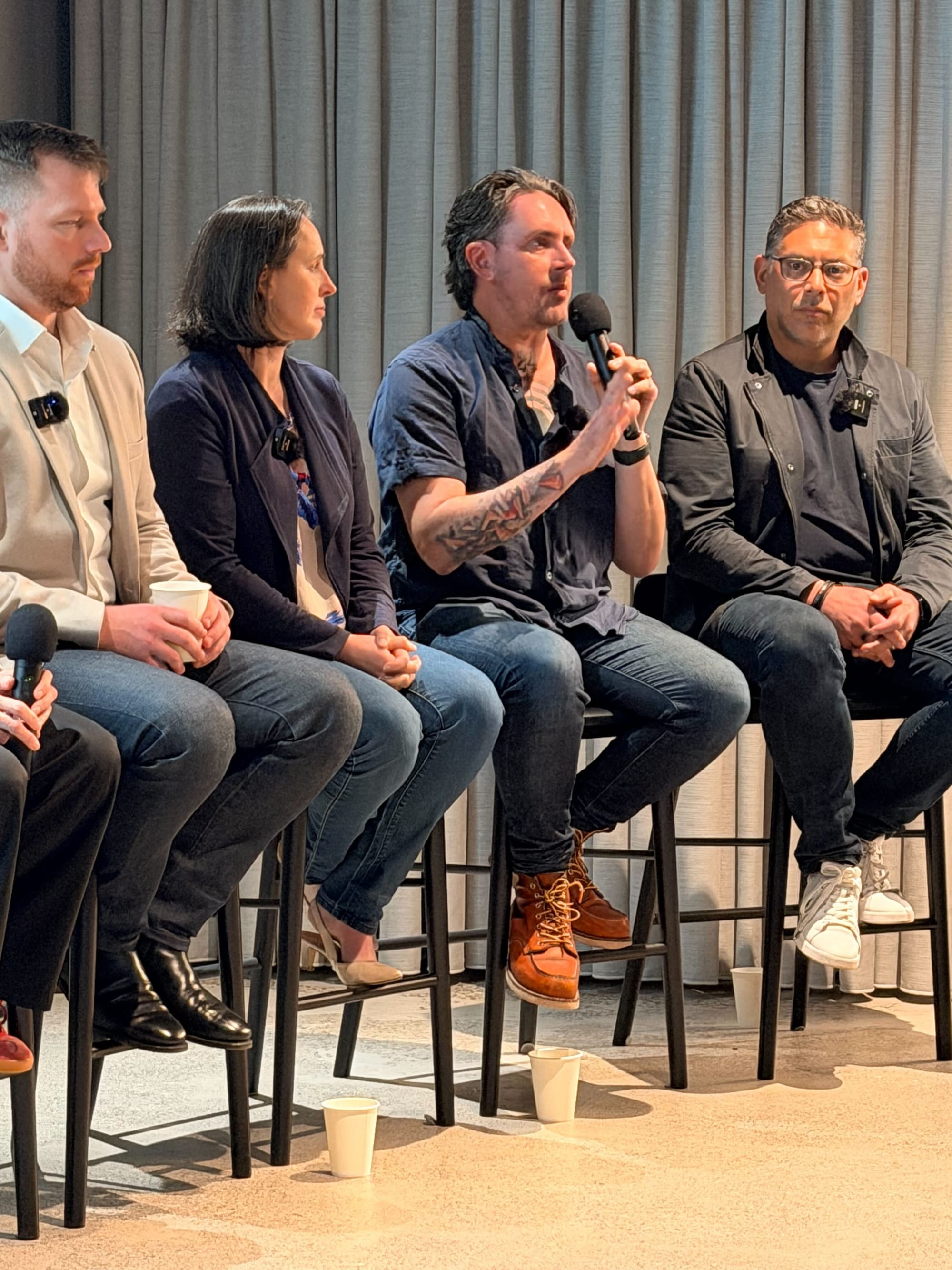
The point wasn't about working harder for the sake of it—it was about ambition. About hunger. About showing up with the same intensity that ecosystems in Sydney, San Francisco, and Singapore bring every day.
Andrew Rowse put it bluntly: "Melbourne produces 40% of the country's high-quality research and we do so little with it." He called out our tall poppy syndrome—the cultural tendency to downplay success instead of celebrating it—and imagined a future where "we see innovators and researchers celebrated like sports figures."
And Jodie Imam delivered perhaps the most provocative take of the night: "If you're a founder and you think you have to rely on an ecosystem or the government to help you, then you're probably not going to be successful. Founders need to just make opportunity happen."
So, Who's Responsible?
When Megan asked the panel who needs to step up to build a better ecosystem, the answers were varied—but the message was consistent: everyone.
Paul argued that government has a "fundamentally critical role to play," but that it's on the tech sector to educate them and make the case. Kate pushed back gently: "Ideas have to come from the community first—government backs great ideas, but if people aren't bringing them forward, where do you back?"
Andrew pointed to infrastructure gaps like Fishermans Bend and called for stronger government leadership on big, strategic projects. Garry circled back to education, advocating for in-person, industry-led training models to close the talent gap.
But perhaps the most powerful moment came when Paul said: "Stop caring about keeping people here. Start here, grow here, sell where the customers are, and come back as boomerangs to reinvest."
It reframed the entire conversation. Melbourne doesn't need to compete with Sydney or San Francisco—it needs to be the best place to start, even if founders eventually scale elsewhere.
What Happens Next?
The debate didn't end with easy answers, and that's exactly the point. Real progress doesn't come from consensus—it comes from tension, from honest conversations, and from people willing to call out what's not working while championing what is.
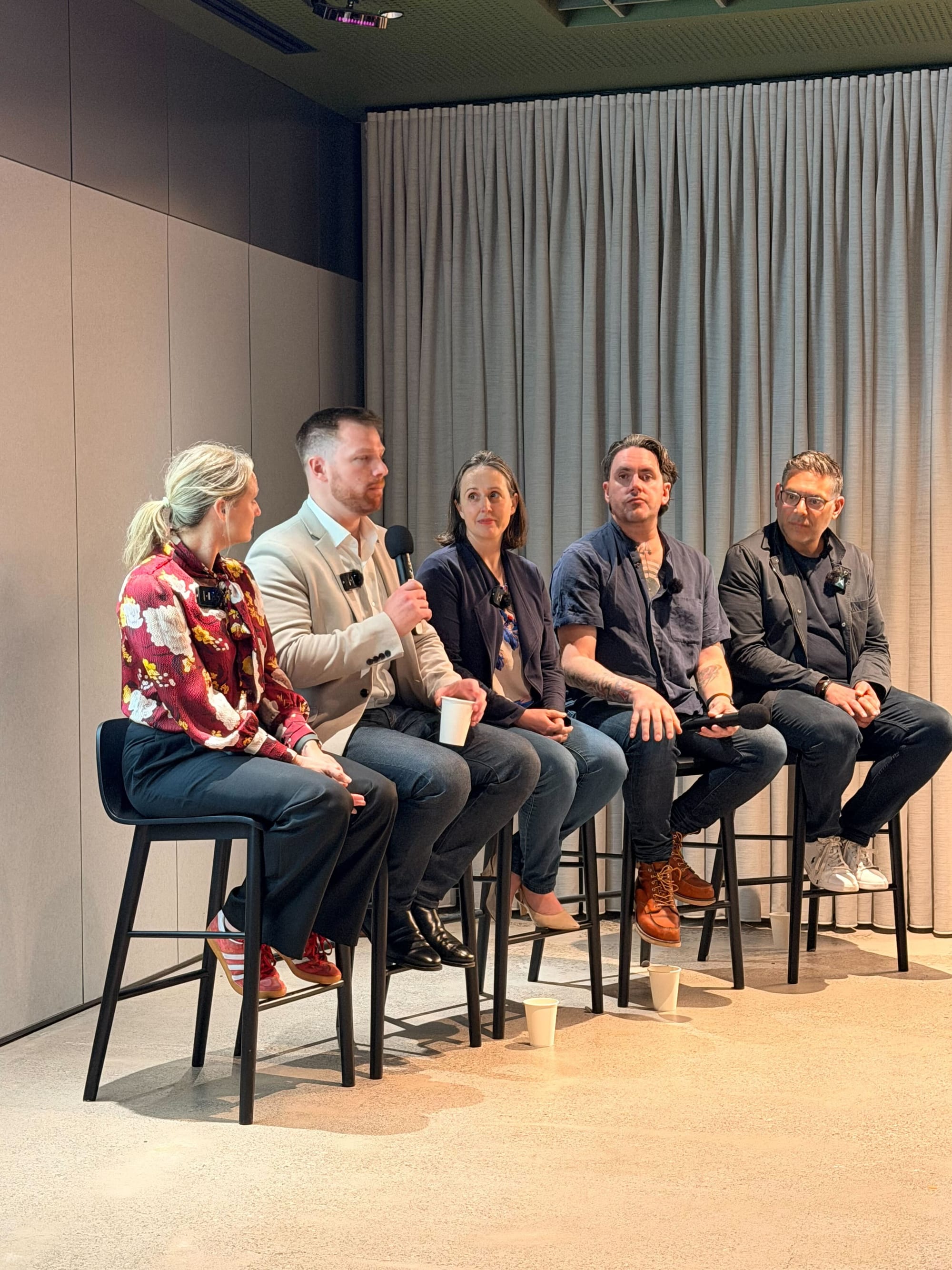
What became clear is that Melbourne has the ingredients: world-class research, strong government programs like LaunchVic, The Cremorne Digital Hub and Breakthrough Victoria, affordable talent, and a tight-knit community. We just need to get better at being loud about it, ambitious with it, and relentless in building on it.
Making It Happen
A night like this doesn't come together without incredible people showing up and leaning in.
Huge thanks to Megan Luttrell and Aussie Founders Club for co-creating this event and moderating with the perfect mix of curiosity and courage. Megan's ability to pull the best out of people while keeping the conversation sharp is exactly why she's become such a cornerstone of this ecosystem.
To our panelists—Kate, Paul, Garry, Jodie, and Andrew—thank you for bringing bold perspectives, honest takes, and the kind of energy that reminded everyone why this work matters. A massive shout-out to Katie Troutman and FB Ventures for sponsoring the event and for backing Melbourne's ecosystem in such a tangible way. If you haven't checked out their new fund yet, it's worth your attention.
Thanks also to Marty McCarthy Media for capturing the night, and to Deepak Singh, Liz, and Felicia Coco for helping make sure everything ran smoothly. And of course, to our CDH team—Alan Tsen, Tristan Dwyer, and Des—for bringing this vision to life.
As the night wrapped up and the crowd moved into networking, you could feel it—the energy, the momentum, the sense that something is shifting.
Melbourne's spark isn't lost. It's just waiting for more people to show up, speak up, and build something worth celebrating.
At Cremorne Digital Hub, we're here to keep these conversations going—and to provide the space where industry, innovators, and ideas collide.
The Great Victorian Startup Debate was presented by Cremorne Digital Hub and Aussie Founders Club, sponsored by FB Ventures, and supported by LaunchVic.