![Building AI-Native: Inside the [NEXT] Founder Day & Guzzle](/content/images/size/w30/format/avif/2026/06/IMG_1540.jpg)
[NEXT] Founder Day & The Cremorne Guzzle — A Day Built for What's Next
On Thursday 25 June, Cremorne Digital Hub hosted one of its most ambitious days yet. Over 150 people filled the building from 11am to well past sunset — founders, builders, operators, and ecosystem partners — all gathered around one through line: what does it actually look like to build a company in the age of AI?
[NEXT] Founder Day was a working day. Three sessions from practitioners who are deep in it, followed by open-build rooms where the learning kept going. Then, as the sun went down, the crowd shifted into The Cremorne Guzzle — drinks, energy, and six founders who got up and showed the room what they're building.
And if you want to catch the sessions in full, we are bringing them to our YouTube channel. Subscribe so you do not miss them when they drop.


Here's what went down.
Building an AI-Native Company
Darius Monsef opened the day by reframing what it actually means to build with AI — not as a tool layered on top of a business, but as the operating system underneath it. Fresh from building Calling Round, he shared how he runs his entire company from his phone, a couple of hours a day, with Claude as the central orchestrator.
- An AI-native company is built around AI as the operating layer, where the founder is the decision-maker but not the bottleneck
- SaaS built dashboards for humans to see metrics and take action — the shift now is building for agents to do the same
- One Claude orchestrator with dedicated threads for Sales, Ops, Product, Legal, and Marketing connects the whole company through a shared brain
- The engineering workflow removes almost every human bottleneck — a need gets described, an agent specs it, a second agent challenges it, and code gets built, reviewed, and shipped to a PR before Darius touches it
- The only human gate is at the merge point
- The starting framework: use Claude for all thinking and strategy first, get a shared brain set up, add connectors, then progressively hand more work off
Takeaway: Start with the one task that takes the most time and adds the least value. Automate that first. Then build from there.
Talk to My Agent with Notion with Tim Jeffries
Tim Jeffries of SmoothOps has spent nearly a decade helping businesses structure their information before AI made that work matter. In this session, he showed exactly how that foundation translates into a Notion-powered operating system that runs most of the sales process without human input.
- The quality of AI output is a direct function of the quality of thinking behind it. Structured data and documented process are the foundation.
- Skills are the detailed SOPs: scope, inputs, steps, edge cases, and outputs, written the way you would brief a new hire
- Guides are the IP layer: the reasoning, the voice, and the decision logic that makes output sound like the person who built the business
- Skills without guides produce confident but generic results. The guides are where the edge lives
- A 13-step sales pipeline runs almost entirely through Notion AI: intake automation, lead qualification against a real IP-backed rubric, and on-brand email drafting, all before a human gets involved
- Not everything should run through a language model. Deterministic tasks belong in code or workers, LLMs should be reserved for reasoning-heavy work
Takeaway: The edge is not in which model you use. It is in how well you have encoded what you know. Strong guides and rich context matter more than model selection.
Best Practices for Claude Code with Rye Smith
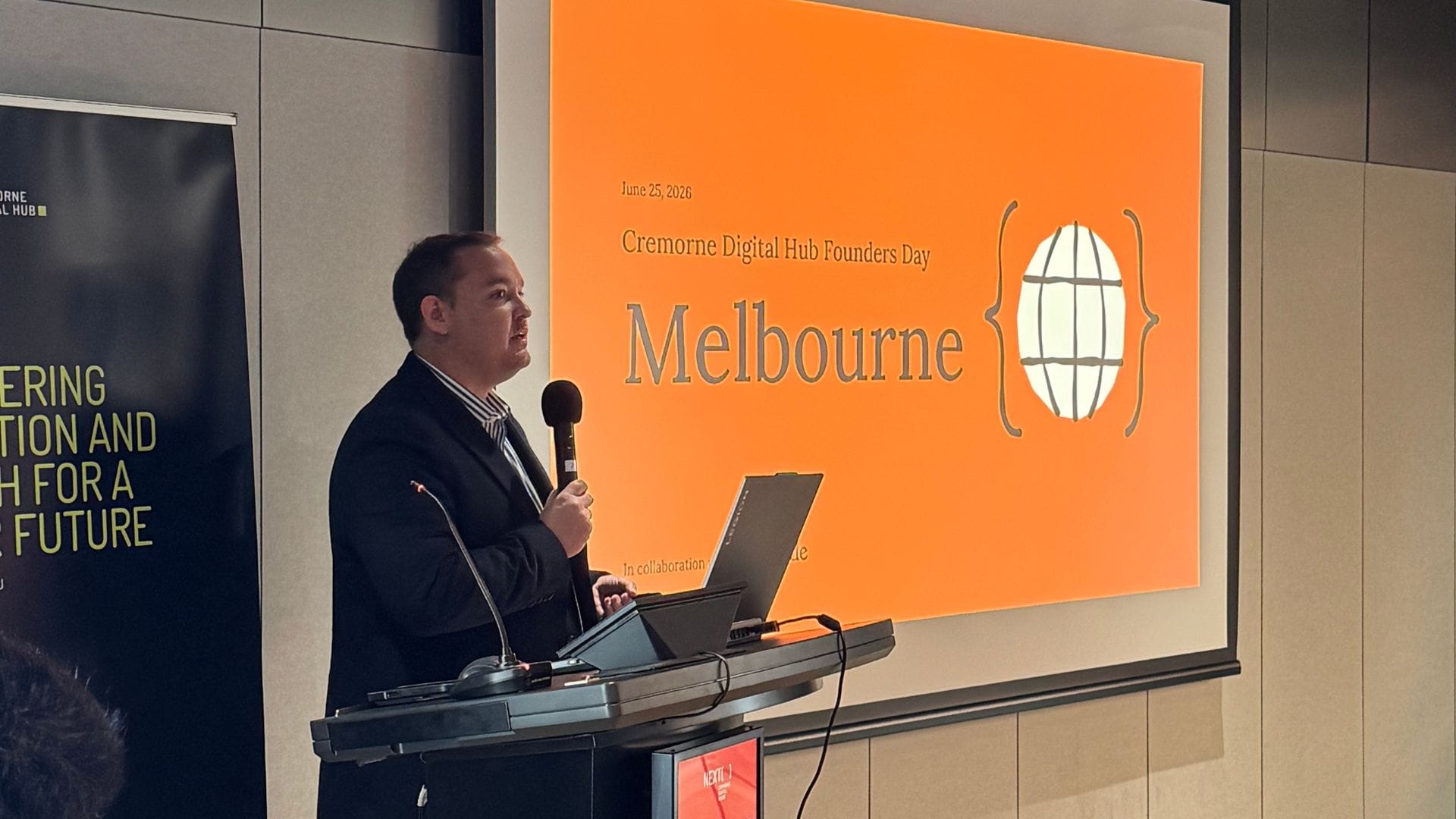
Rye Smith, Claude Ambassador for Australia and fresh from presenting at Anthropic's Code with Claude conference in Tokyo, opened with a story about a 25-year dream that Claude finally made real. Manager Eleven, a live multiplayer football management game built on a 1999 C++ engine, now runs in 16 countries. He shared the tools and mindset behind that kind of output.
- The barrier to building ambitious things has collapsed — the constraint now is depth of focus, not capability
- /goal is a terminal command that loops until a complex task is complete, removing the need to re-prompt every few minutes
- A Council of Agents spins up specialised roles across SEO, UI, QA, and copywriting to work in parallel on multi-disciplinary tasks
- Consulting the Skeptic introduces a critical agent that challenges confident outputs before they become problems
- Claude CoWork handles scheduled tasks like lead triage, proposal drafting, and live dashboard generation without human input
- Stop describing the work. Start delegating it
- Build vertically into the specific problem only you are solving — the models will handle the wide
Takeaway: Pick the one task you do more than once and hate doing. Automate it through CoWork. That is the start of the workflow automation journey.
Building on Solana with Sal Samani
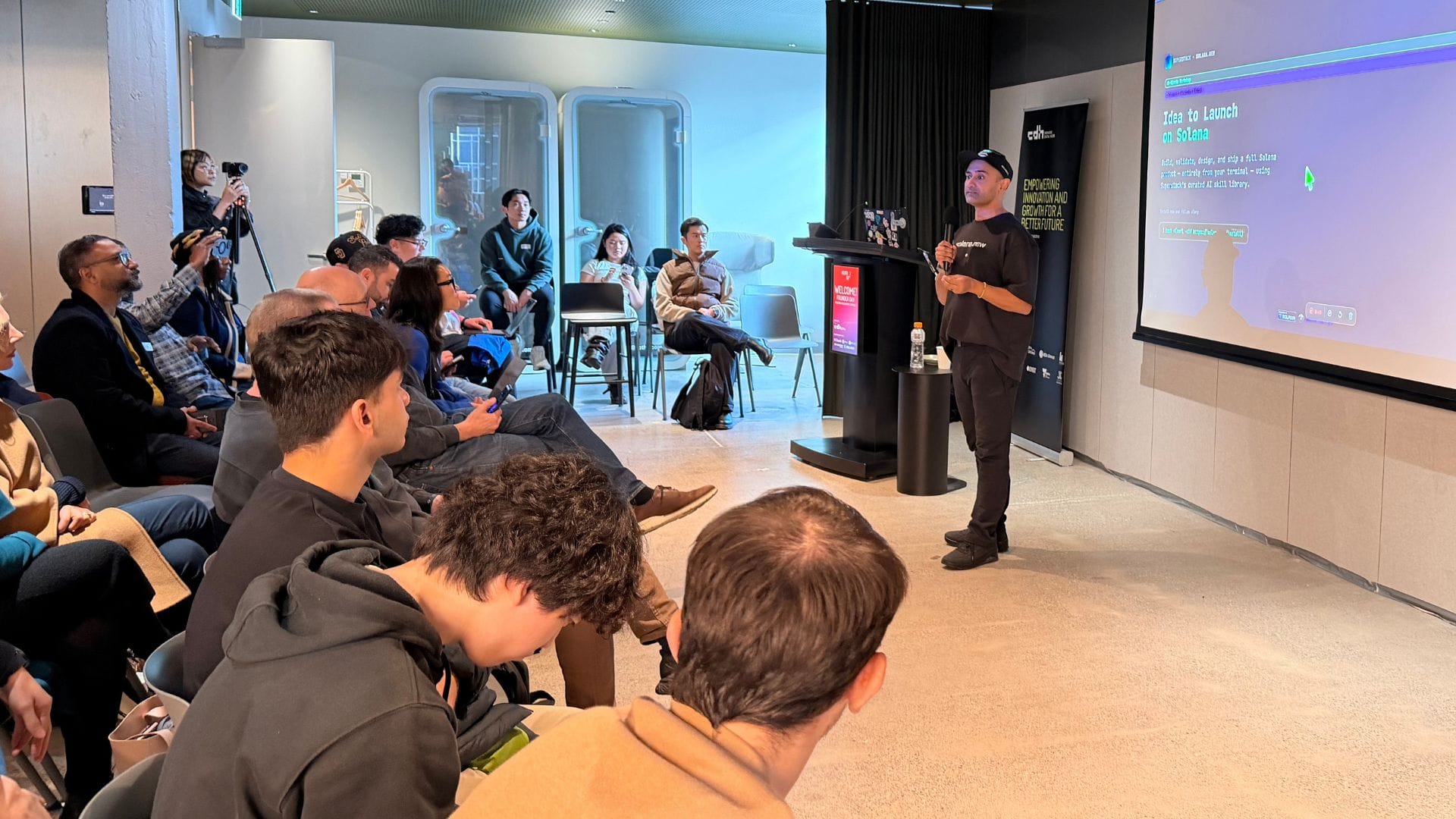
Sal Samani from Superteam Australia brought a different angle to the afternoon. Setting aside the noise around price action and speculation, he made the case that on-chain infrastructure is now a legitimate and practical foundation for building real companies — and that the timing has never been better for founders to explore it.
- Stablecoins have unlocked business models that were not viable before — streaming payments, micropayments, and pay-per-use services that card infrastructure cannot support
- X402 pay-to-proceed flows let founders charge cents for microservices like ABN lookups, KYC validations, and API reports — creating new revenue models around tasks that previously had no monetisation path
- Building on-chain means building with immutable, public, decentralised infrastructure — no intermediary can block a transaction, modify a record, or shut a program down
- The Solana Superstack at sol.new/dev gives founders a full build environment: Next.js frontend, Rust smart contracts, X402 payments, and automated deployment in one place
- A working product with a booking flow, photo upload, and payment layer went from idea to deployed app in under 45 minutes during the session — not as a demo, but as a genuine build
- The /roast my product feature stress-tests an idea before a founder invests weeks in the wrong direction
Takeaway: On-chain is not a category. It is an infrastructure choice. If the business model involves payments, verification, or access control, it is worth asking whether building on Solana makes the product more defensible and the revenue model more direct.
The Cremorne Guzzle: Founder Asks & Lightning Pitches
The Guzzle brought a different kind of energy to close out the day. With drinks in hand and the room buzzing from a full day of sessions, six founders took the floor and made their case to a crowd that had spent the last seven hours thinking about what it means to build something real. Each pitch was two minutes — tight, focused, and personal. Antler's was on hand to offer the winner a 1:1 session, with CDH adding two months of membership on top.
The six founders who pitched:
- Kyra Gupta, Founder of Z Signal — a platform where young people aged 13 to 19 provide structured, certified feedback on founder pitches, with reviewer credentials recorded on Solana
- Jed Wong Founder of CareNeighbour — a context layer for aged care coordinators that surfaces all relevant participant information directly to their cursor, cutting hours of admin from incident reports
- Jane Korneyko Founder of Sova — a data-driven diagnostic platform that maps a founder's stage, surfaces relevant playbooks, and gives access to frameworks used by the world's leading accelerators
- Peter Christo from DACS (Digital Asset Compliance Solutions) — audit-grade cryptographic proof of cryptocurrency ownership, built for the SMSF market and expanding into exchanges and custodial services
- Samin Haque Founder of The Melbourne Bionics Company — multi-modal athlete data across video, lidar, and sound to predict injuries and generate robotics training data from elite athletes
- Tom Kellett Founder of Effit — a community accountability platform for movement, partnered with Beyond Blue, with 50% retention at eight weeks and a UK founding partner about to run 5,000 kilometres across 77 cities in 99 days
Tom Kellett and Effit took the night. Born from a personal 35-kilogram transformation, Effit is building the home for movement communities — connecting people, keeping them accountable, and proving that retention is possible when accountability is shared. The passion was obvious. The traction backed it up.
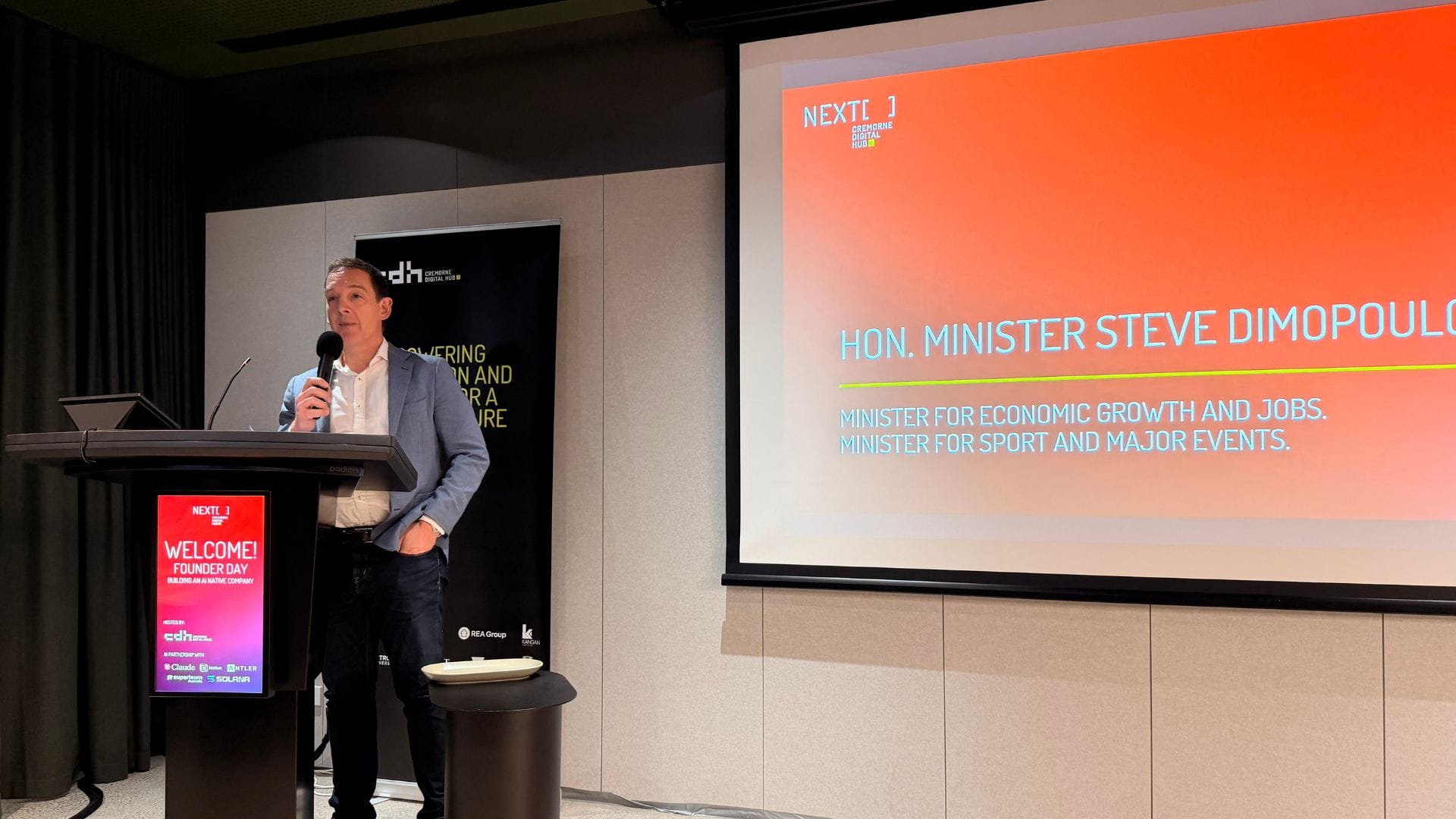
Joining the room for the evening was the Hon. Minister Steve Dimopoulos, Minister for Economic Growth and Jobs, and Minister for Sport and Major Events, whose presence added a meaningful signal of government support for what this ecosystem is building.
How CDH Supports Founders Through Events Like This
CDH programming is built around one principle and it is to bring in people who are actually doing the thing. Founder Day was designed to give founders a cut-through on the tools and mindsets shaping how AI-native companies are being built right now, and to create space for them to start applying it before they even left the building.
The Guzzle adds another dimension. Founders pitch their real companies, make real asks, and walk away with real connections. When those two formats run back to back on the same day, the learning from the morning feeds the energy of the evening.
Thank You to Everyone Who Joined
To every person who walked through the doors, a massive thank you. Over 150 people showed up to learn, build, connect, and back the founders in this room.
And a lot of appreciation to the experts, Darius, Tim, Rye, and Sal, for sharing your real workflows, real tools, and real thinking so openly. To our partners at Notion, Claude Code, Solana, and Superteam Australia, none of this happens without you.
A special thank you to the Hon. Minister Steve Dimopoulos for joining us at the Guzzle. His words to the founders in the room were a reminder of how far this ecosystem has come — and how much further it can go.
To Kyra, Jed, Jane, Peter, Samin, and Tom, kudos to your courage to stand up and show your work.
See you at the next one.