If 2024 marked the slow climb out of the trough, 2025 showed us what a rebound looks like at full speed.
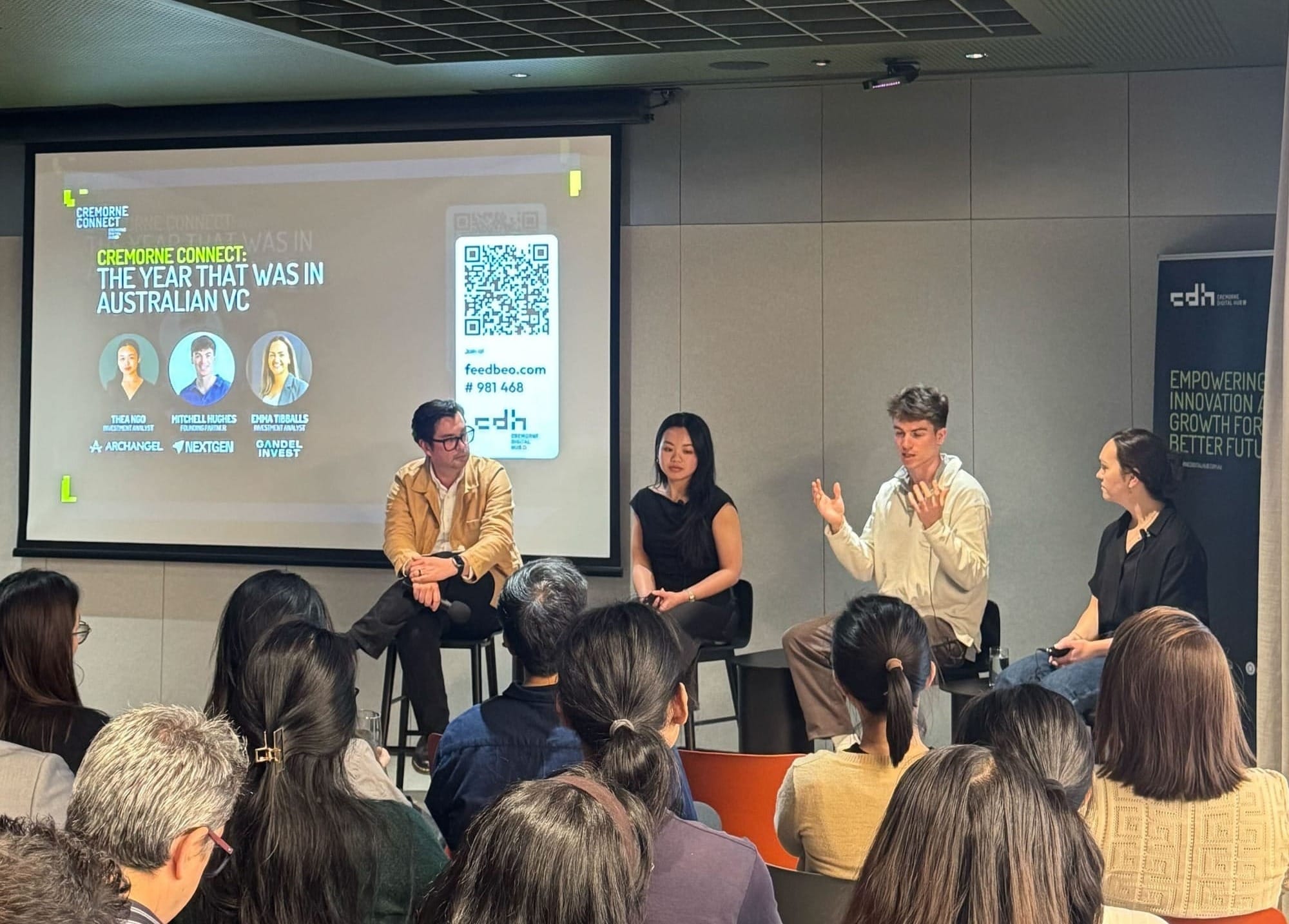
At last night’s event — with our amazing panel, Thea Ngo (Archangel Ventures), Mitchell Hughes (NextGen Ventures), and Emma Tibballs (Gandel Invest) — the conversation centred on where Australian venture really sits today and the shifts reshaping how founders build and how investors back them.
Across the panel, one thing was unmistakable: the market is more competitive than ever again, and the pace is only accelerating.
AI Fueled the Rebound — But Depth Now Matters More Than Hype
The surge in investment across 2024 and into 2025 wasn’t random. AI was the engine. Capital flowed into teams exploring new modalities, rethinking workflows, and building products that stretched beyond incremental improvements.
But the panel drew a hard line: AI alone doesn’t make a company investable.
The strongest businesses aren’t thin wrappers on models; they’re the ones tackling real problems with genuine depth. They build defensible technology, draw on deep domain insight, and create distribution advantages that competitors can’t simply replicate overnight.
In other words, AI was the catalyst — but execution was the differentiator.
Australian Founders Aren’t Waiting Anymore — They’re Going Global Earlier
One of the clearest shifts of the past year is how early Australian startups are entering global markets.
This isn’t a “post-Series A” decision anymore. Founders are now going overseas a lot earlier.
This early push is reshaping the ecosystem in meaningful ways. Rounds are forming sooner, global investors are appearing earlier in the pipeline, and local VCs are being forced to move faster and build conviction far earlier than before. The overall bar for ambition has lifted, and founders are responding by operating with a sharper pace and a much broader horizon.
Pre-Seed Became a Knife-Edge Competitive Stage
With founders accelerating their timelines, investors have followed.
Pre-seed and seed rounds in 2025 were getting more competitive according to the panelists. They were contested spaces where funds had to show more than capital to earn a place at on the captable.
It’s no longer enough to be early. You need to be show conviction and more importantly value.
Resilience: The Quiet Signal That Still Predicts Outcomes
Amidst all the noise — AI breakthroughs, global expansion, competitive rounds — one theme continued to anchor the discussion: founder mentality.
The panel emphasised that the founders who broke through this year were the ones who:
- stayed grounded through uncertainty
- used capital with discipline
- held conviction in their direction
- didn’t get distracted by the noise
In a year defined by speed, resilience still separated the durable from the fleeting companies.
A Contrarian View: Fundraising Might Be Easier Than We Pretend
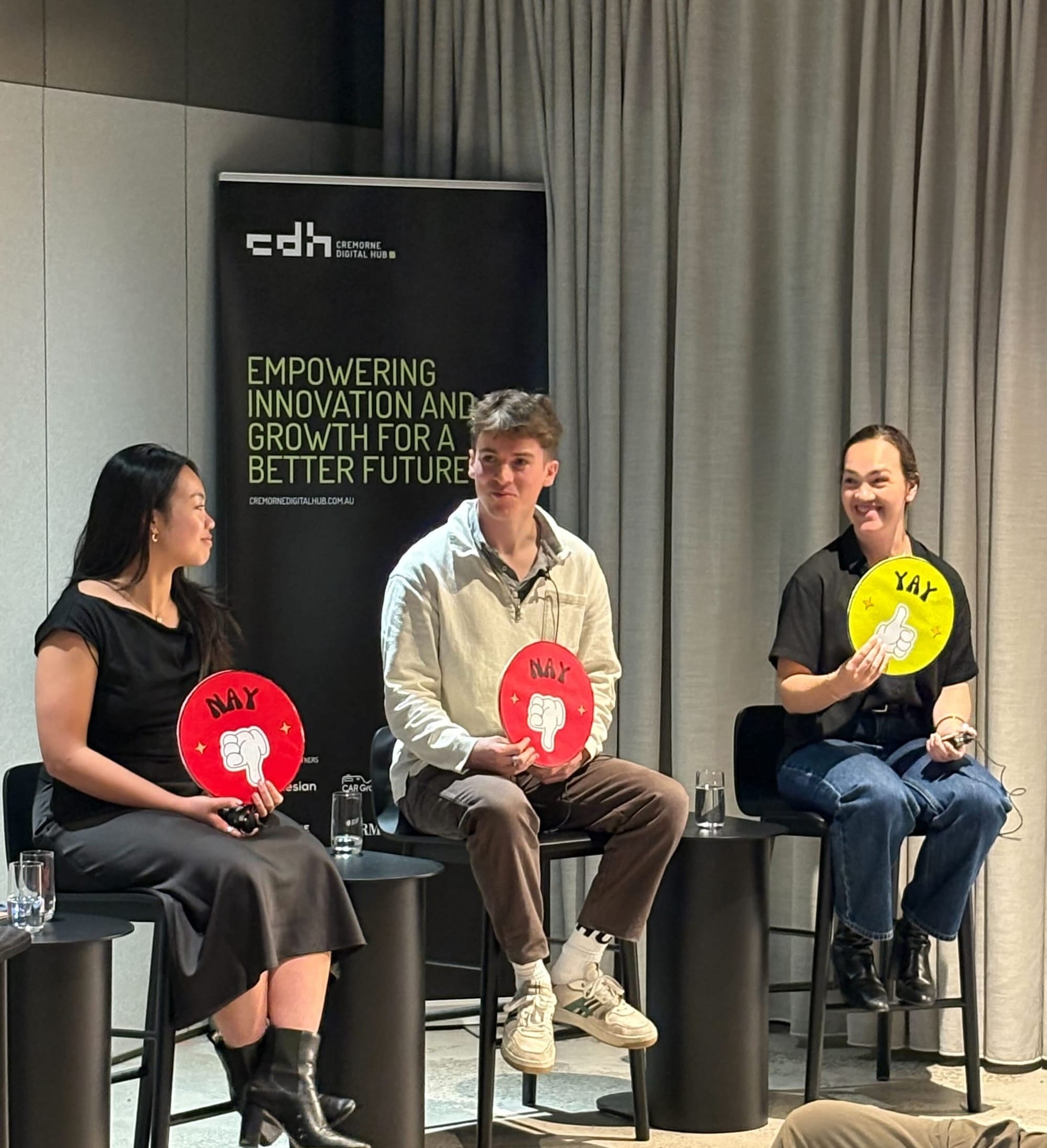
One of the night’s boldest points came from Thea, who argued that fundraising can be one of the easiest problems for the right founder to solve.
Her reasoning was simple: When a founder is exceptional — sharp insight, strong execution, clear ambition — their incentives naturally align with investors. The money follows.
It’s a refreshing counterpoint in a market that often treats fundraising as a barrier rather than a by-product of building something compelling.
Onwards and Upwards
It feels less like a return to 2021 and more like the start of a new cycle — one driven by depth, speed, and ambition rather than exuberance.
Australian venture didn’t just rebound. It's levelled up.